Deconstructivism, Nature, and Creation in Loan
English tex is underneath the dutch text.

Deconstructivisme, Natuur en de Schepping in Bruikleen
Inleiding
Het stikstofdebat in Nederland lijkt op het eerste gezicht een technisch dossier over emissies en ecologische modellen. Maar onder de oppervlakte speelt een veel fundamentelere strijd: een botsing van wereldbeelden. Wat is natuur? Is zij een autonome macht die streeft naar balans, of een dynamisch geheel dat sinds de zondeval onderhevig is aan verval en verandering?
In de afgelopen decennia heeft het deconstructivisme diepe sporen nagelaten in politiek, media en kerk. Het heeft vaste geloofswaarheden afgebroken en vervangen door culturele narratieven waarin de mens vooral als vijand van de natuur verschijnt. Daarmee is een negatief mensbeeld ontstaan dat niet alleen de samenleving, maar ook de christelijke gemeenschap in Nederland heeft besmet.
Naturalistisch versus creationistisch denken
Naturalistisch denken: Natuur wordt gezien als een autonome moederfiguur (Gaia), de mens als vijand die haar verstoort. Het doel van beleid is herstel van een veronderstelde balans.
Creationistisch denken: Natuur is dynamisch en vervloekt sinds de zondeval. Er bestaat geen blijvende balans. De mens heeft een positieve rol als rentmeester, geroepen om de schepping te ontwikkelen en te bewaren.
Deze tegenstelling verklaart waarom partijen als D66 en PvdD de mens neerzetten als vijand van de natuur, terwijl een bijbels perspectief juist benadrukt dat de mens geroepen is om de aarde te bewerken en te bewaren.
De schepping in bruikleen
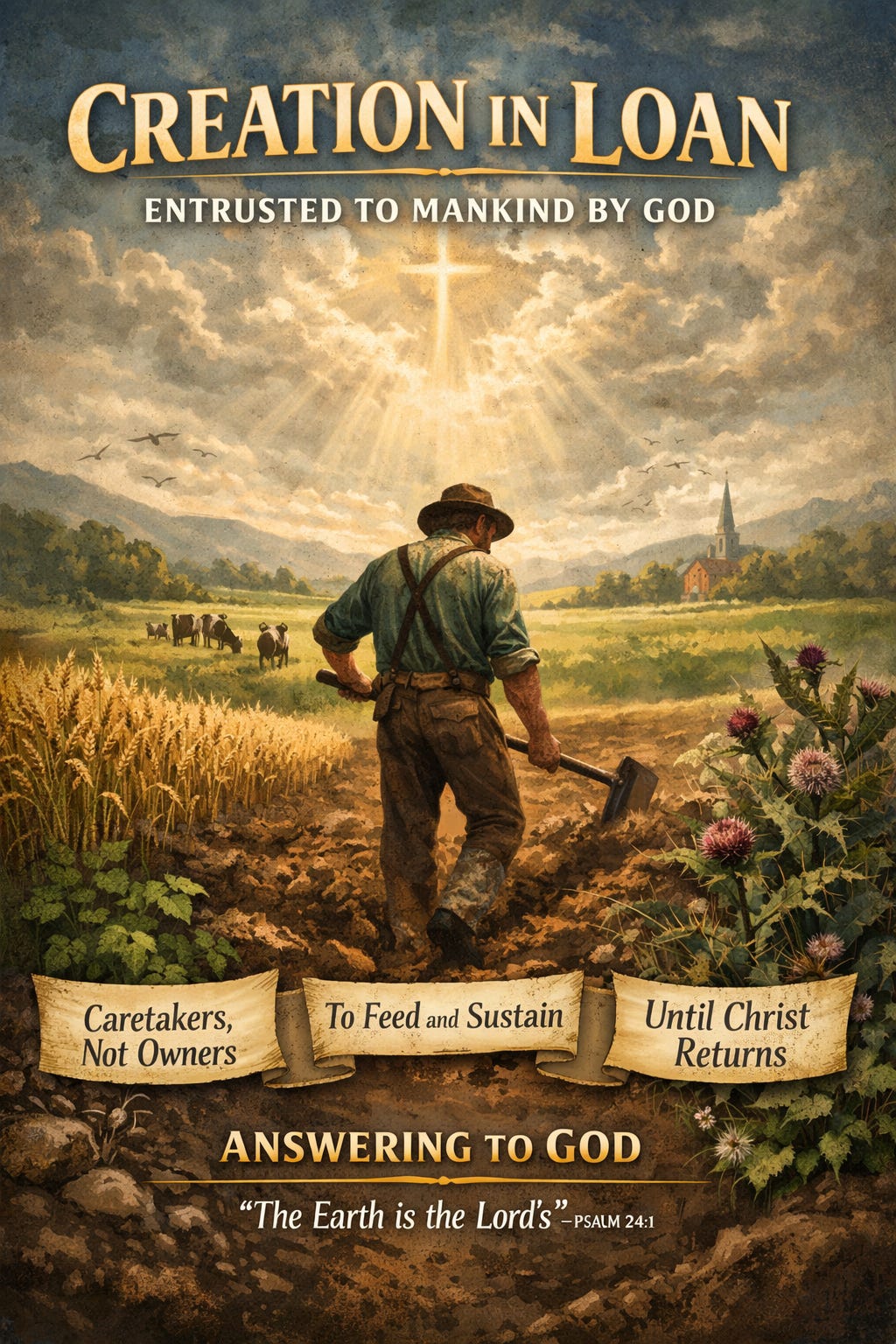
Een cruciaal bijbels beeld dat vaak ontbreekt in het huidige debat is dat de schepping ons door God in bruikleen is gegeven.
Geen eigendom: De aarde behoort niet aan de mens toe, maar aan God. Wij zijn slechts beheerders.
Voeding en verzorging: De schepping is gegeven om de mens te voeden en te verzorgen, niet alleen nu maar ook voor toekomstige generaties.
Tijdelijkheid: Dit bruikleen duurt totdat Christus terugkomt om te oordelen. Tot die tijd is de mens geroepen tot trouw en gehoorzaamheid.
Dit perspectief plaatst de mens niet tegenover de natuur, maar in een verantwoordelijke rol: de aarde gebruiken zonder haar te vereren, en haar ontwikkelen zonder haar te vernietigen.
De invloed van deconstructivisme
Het deconstructivisme heeft veel christenen en theologen beïnvloed. Waar vroeger de kern lag bij ellende, verlossing en dankbaarheid, zien we nu een verschuiving naar inclusiviteit, duurzaamheid en culturele schuld.
Politiek: De ChristenUnie legitimeert progressieve agenda’s met bijbelwoorden, maar verliest confessionele scherpte.
Media: Het Nederlands Dagblad legitimeert hermeneutische vernieuwing en culturele interpretaties.
Kerk: Gereformeerde kerken zijn verdeeld door vernieuwing en afscheidingen.
Het gevolg is dat veel christenen feitelijk naturalistisch denken, en heidense beelden van natuur als moederfiguur binnen de kerk brengen.
Het negatieve mensbeeld
De kern van dit denken is een negatief mensbeeld: de mens is een probleem, een vijand van de natuur. Maar de Bijbel leert iets anders:
De natuur is vervloekt door God: “Doornen en distels zal zij u voortbrengen” (Genesis 3:18).
De mens is geroepen tot rentmeesterschap: bewerken en bewaren van de aarde.
God openbaart zich in de natuur als Almachtige, niet als moederfiguur.
Het negatieve mensbeeld kan gezien worden als een oordeel van God: Hij verblindt de mens die Hem niet erkent, zodat deze zichzelf vernietigt.
De “God is liefde”-afgod
Een ander gevolg van deconstructivisme is de opkomst van de “God is liefde”-afgod. In veel kerken is God gereduceerd tot een sentimenteel beeld van liefde, zonder heiligheid, jaloersheid of wraak.
Maar de Bijbel openbaart God anders:
Hij is liefde, maar ook heilig en rechtvaardig.
Hij is jaloers en duldt geen andere goden naast zich.
Hij is wrakend en verwacht vrees en eerbied.
Het eenzijdige beeld van God als “liefde” leidt tot een verzwakt geloof waarin zonde en oordeel geen plaats meer hebben.
Oordeel en verblinding
Zoals Paulus schrijft in Romeinen 1: God geeft mensen over aan hun eigen verkeerde denkbeelden wanneer zij Hem niet erkennen. Dat zien we vandaag in Europa:
De naturalistische mens wordt verblind en loopt als een lemming richting zelfvernietiging.
Europa wordt geconfronteerd met een cultuurverandering waarin de God-ontkennende mens uitstervend wordt omdat zijn fundament ontbreekt.
Dit is Gods voorzienigheid: Hij laat zien dat zonder erkenning van Hem, de mens zichzelf vernietigt.
De oproep die ontbreekt
In het stikstofdebat ontbreekt een krachtig christelijk geluid dat oproept tot erkenning van God. Het gaat om meer dan emissiegrenzen en modellen: het gaat om de vraag of wij God erkennen als Heer van de schepping.
Christus: Hij heeft betaald voor onze zonden en verlost ons van oordeel.
Heilige Geest: Hij heiligt ons en doet ons wandelen in gehoorzaamheid.
Godsvrees: wij moeten ons befrezen voor de God van het heelal, die de natuur als instrument van oordeel én bescherming gebruikt.
Bruikleen: wij moeten erkennen dat de schepping ons slechts tijdelijk is toevertrouwd, om haar te gebruiken tot voeding en verzorging, in verwachting van Christus’ wederkomst.
Conclusie en oproep tot bekering
Het deconstructivisme heeft de kerk, politiek en media in Nederland diepgaand veranderd. Waar vroeger de nadruk lag op zonde en genade, staat nu een cultureel schuldnarratief centraal. Maar dit leidt tot verblinding, zelfvernietiging en een verkeerd mensbeeld.
Daarom klinkt vandaag de oproep: Bekeer u tot de God van de Bijbel. Erken dat de schepping niet ons bezit is, maar Zijn eigendom, ons in bruikleen gegeven. Gebruik haar tot voeding en verzorging, leef in godsvrees, en verwacht Christus’ wederkomst. Alleen zo kan de kerk opnieuw getuigen van het evangelie dat werkelijk bevrijdt.
Deconstructivism, Nature, and Creation in Loan
Introduction
The nitrogen debate in the Netherlands may appear at first glance to be a technical dossier about emissions and ecological models. But beneath the surface lies a much more fundamental struggle: a clash of worldviews. What is nature? Is it an autonomous power striving for balance, or a dynamic whole that, since the Fall, has been subject to decay and change?
In recent decades, deconstructivism has left deep marks on politics, media, and the church. It has dismantled fixed truths of faith and replaced them with cultural narratives in which humanity is portrayed primarily as the enemy of nature. This has produced a negative view of humanity that has infected not only society but also the Christian community in the Netherlands.
Naturalistic versus Creationist Thinking
Naturalistic thinking: Nature is seen as an autonomous mother figure (Gaia), humanity as the enemy who disturbs her. Policy aims at restoring a supposed balance.
Creationist thinking: Nature is dynamic and cursed since the Fall. There is no lasting balance. Humanity has a positive role as steward, called to develop and preserve creation.
This contrast explains why parties such as D66 and the Party for the Animals portray humanity as the enemy of nature, while a biblical perspective emphasizes that humanity is called to cultivate and preserve the earth.
Creation in Loan
A crucial biblical image often missing in today’s debate is that creation has been given to us by God in loan.
Not ownership: The earth does not belong to humanity but to God. We are only caretakers.
Food and care: Creation is given to feed and care for humanity, not only now but also for future generations.
Temporality: This loan lasts until Christ returns to judge. Until then, humanity is called to faithfulness and obedience.
This perspective does not place humanity against nature but in a responsible role: to use the earth without worshiping it, and to develop it without destroying it.
The Influence of Deconstructivism
Deconstructivism has influenced many Christians and theologians. Where once the core lay in misery, redemption, and gratitude, we now see a shift toward inclusivity, sustainability, and cultural guilt.
Politics: The Christian Union legitimizes progressive agendas with biblical words but loses confessional sharpness.
Media: The Nederlands Dagblad legitimizes hermeneutical innovation and cultural interpretations.
Church: Reformed churches are divided by innovation and secessions.
The result is that many Christians think in naturalistic terms and bring pagan images of nature as a mother figure into the church.
The Negative View of Humanity
The core of this thinking is a negative view of humanity: humanity is a problem, an enemy of nature. But the Bible teaches something else:
Nature is cursed by God: “Thorns and thistles it shall bring forth for you” (Genesis 3:18).
Humanity is called to stewardship: to cultivate and preserve the earth.
God reveals Himself in nature as Almighty, not as a mother figure.
The negative view of humanity can be seen as a judgment of God: He blinds those who do not acknowledge Him, so that they destroy themselves.
The “God is Love” Idol
Another consequence of deconstructivism is the rise of the “God is love” idol. In many churches, God has been reduced to a sentimental image of love, without holiness, jealousy, or wrath.
But the Bible reveals God differently:
He is love, but also holy and just.
He is jealous and tolerates no other gods beside Him.
He is wrathful and expects fear and reverence.
The one-sided image of God as “love” leads to a weakened faith in which sin and judgment have no place.
Judgment and Blindness
As Paul writes in Romans 1: God gives people over to their own wrong thinking when they do not acknowledge Him. We see this today in Europe:
The naturalistic person is blinded and runs like a lemming toward self-destruction.
Europe faces a cultural shift in which the God-denying person becomes extinct because his foundation is missing.
This is God’s providence: He shows that without recognition of Him, humanity destroys itself.
The Missing Call
In the nitrogen debate, a strong Christian voice calling for recognition of God is absent. It is about more than emission limits and models: it is about whether we acknowledge God as Lord of creation.
Christ: He has paid for our sins and delivered us from judgment.
Holy Spirit: He sanctifies us and leads us in obedience.
Fear of God: We must fear the God of the universe, who uses nature as an instrument of judgment and protection.
Loan: We must acknowledge that creation has only been entrusted to us temporarily, to use it for food and care, in expectation of Christ’s return.
Conclusion and Call to Repentance
Deconstructivism has profoundly changed the church, politics, and media in the Netherlands. Where once the emphasis lay on sin and grace, now a cultural guilt narrative dominates. But this leads to blindness, self-destruction, and a distorted view of humanity.
Therefore, the call today is: Repent to the God of the Bible. Acknowledge that creation is not our possession but His property, given to us in loan. Use it for food and care, live in fear of God, and await Christ’s return. Only then can the church once again testify to the gospel that truly sets free.